Designing Hardware for High-Density AI Workloads
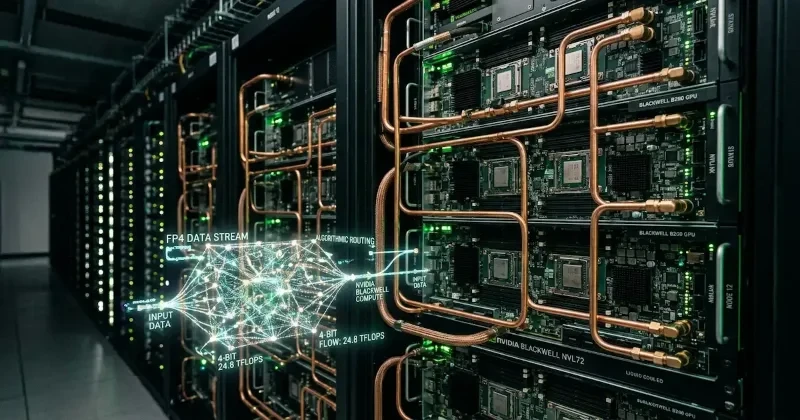
Training massive neural networks requires an unprecedented amount of compute power, making modern thermal management and grid reliability critical bottlenecks for production teams. When your compute clusters pull upwards of 100 kW per rack, standard data center architectures collapse under the thermal load. We have been watching the physical constraints of AI scaling closely, and the battle has officially moved from software optimization to heavy industrial engineering. Hardware availability is no longer just about securing GPUs-it is about keeping them powered and cooled without blowing out local grids.
Summary
Schneider Electric and Taiwan's Hon Hai Technology Group, universally known as Foxconn, announced a strategic collaboration to design, manufacture, and scale specialized infrastructure for next-generation AI data centers. The partnership combines Foxconn's precision electronics manufacturing capabilities with Schneider Electric's established industrial power, liquid cooling, and energy-management technologies.
The companies intend to build integrated, factory-ready data center modules optimized specifically for high-density AI clusters. Production lines are already spinning up, with commercial availability expected to roll out later this year. By combining server production and infrastructure design under one roof, the alliance intends to eliminate the typical delays associated with custom-building cooling loops and power sub-stations for newly acquired compute arrays.
Rather than buying chips from one vendor, chassis from another, and liquid cooling manifolds from a third party, the joint initiative targets the delivery of unified, modular systems. The joint venture focuses heavily on reducing deployment times for hyperscalers, cloud providers, and private enterprise clouds currently facing massive backlogs in custom data center construction.
Remarks
This joint venture is a highly necessary step forward for the developer ecosystem, which has long been constrained by physical infrastructure bottlenecks. For too long, software teams have treated the cloud as a magical, infinite pool of compute, but the reality of 100,000-GPU clusters has forced a hard collision with the laws of thermodynamics. This partnership signals that the industry is finally maturing past piecemeal hardware assembly toward unified, vertically integrated compute blocks.
We predict this move will spark a wave of consolidations across the AI supply chain, forcing traditional server OEMs to either partner with power infrastructure giants or get left behind. We will likely see competitors like Vertiv and Supermicro accelerate their own integrated cooling alliances to counter this massive distribution pipeline.
+-----------------------------------------------------------------------+
|  VIRTUALIZED SOFTWARE LAYER (Orchestration, CUDA, PyTorch, Triton)    |
+-----------------------------------------------------------------------+
|  FOXCONN COMPUTE HARDWARE   (GPUs, ASICs, High-Speed Fabrics, Blades)  |
+-----------------------------------------------------------------------+
|  SCHNEIDER INFRASTRUCTURE   (Liquid Cooling, Power Distribution, PDU) |
+-----------------------------------------------------------------------+
Compared to the previous era of standard air-cooled data center racks, this modular approach represents a complete shift in how physical compute environments are provisioned. Instead of adapting existing rooms to fit hot chips, the entire enclosure is engineered around the thermal footprint of the silicon from day one.
| Infrastructure Metric | Legacy Data Center Racks | Next-Gen AI Infrastructure Modules |
| Cooling Architecture | Ambient Air/Raised Floor Cooling | Direct-to-Chip Liquid Cooling & Manifolds |
| Power Density Cap | ~10 kW to 20 kW per rack | 100 kW+ per rack support |
| Deployment Model | On-site custom engineering & plumbing | Pre-engineered, factory-integrated modules |
| Primary Workload | Microservices, Databases, Traditional Web | LLM Training, High-Density Batch Inference |
The bottleneck of artificial intelligence development has officially shifted from algorithmic design to physical infrastructure limits. The Foxconn and Schneider Electric alliance proves that scaling AI is now fundamentally a hardware engineering problem. As compute density requirements continue to skyrocket, integrated factory-built modules will become the baseline standard for cloud providers and enterprise clusters alike. We are keeping a close watch on how this infrastructure deployment shakes out in real-world benchmarks over the coming quarters.