NVIDIA Blackwell and Confidential Computing Land in Apple PCC
We have been watching Apple’s infrastructure strategy closely, and this week’s WWDC brought a massive, unexpected shift. Apple is officially expanding its Private Cloud Compute (PCC) architecture beyond its custom first-party data centers. In a blockbuster partnership, Apple is deploying NVIDIA Blackwell GPUs featuring hardware-based Confidential Computing directly onto Google Cloud infrastructure.
This marks a radical departure from Apple's long-held tradition of keeping its cloud AI stack strictly inside an in-house, Apple Silicon-powered environment. As server-side AI processing demands scale exponentially, Apple has realized it cannot build data centers fast enough to handle complex, multi-turn reasoning alone. By pairing up with NVIDIA and Google, they are establishing a blueprint for high-performance, verifiable cloud inference that does not compromise user privacy.
Summary
The collaboration, announced during Apple's annual WWDC developer event, integrates NVIDIA Blackwell GPUs with hardware-enforced security layers directly into Private Cloud Compute running on Google Cloud. This infrastructure stack will support server-side inference for advanced Apple Foundation Models, which were custom-built by Apple and Google utilizing core technologies from the Gemini model family.
               [ User AI Request ]
                       │
                       ▼
         [ On-Device Apple Silicon ] (Core Tasks)
                       │
             (Complex Reasoning / Agentic Tasks)
                       │
                       ▼
       [ Apple Private Cloud Compute (PCC) ]
                       │
                (Scales Out To)
                       │
                       ▼
     [ Google Cloud Secure Infrastructure ]
                       │
                       ▼
    [ NVIDIA Blackwell GPUs + Confidential Compute ]
        ├── Trusted Execution Environments (TEEs)
        ├── Hardware-Rooted Trust & Attestation
        └── End-to-End Encrypted Data Paths
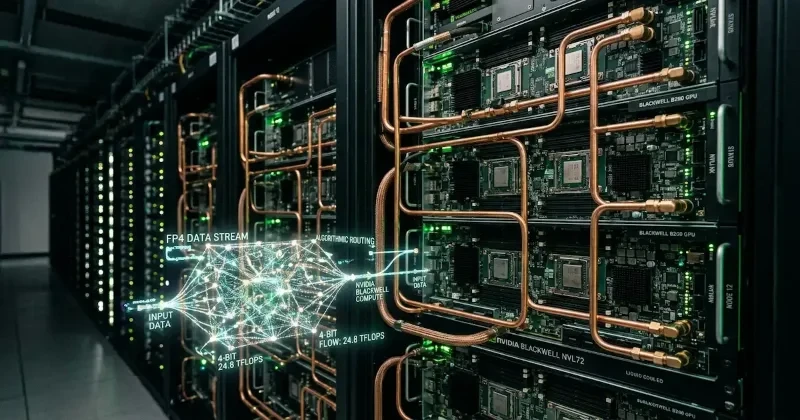
The driving force behind this architecture is NVIDIA Confidential Computing. This technology isolates active AI workloads inside hardware-shielded Trusted Execution Environments (TEEs). It protects sensitive data during active processing by preventing the underlying platform, hosting infrastructure, or cloud operators from peering into user inputs, chat logs, or dataset properties.
Before any sensitive data enters the cloud server, the system runs a cryptographic remote attestation protocol. This process verifies that the software and underlying GPU hardware are authentic, untampered, and fully secured. Additionally, the architecture establishes fully encrypted data communication paths between hardware components, preventing lateral data leakage.
This massive deployment signals a major turning point for the AI industry. As foundational models grow too complex for edge hardware, vendors are forced to offload heavy workloads to cloud infrastructure. The Apple, Google, and NVIDIA pipeline proves that massive multi-tenant clouds can execute high-performance inference while maintaining strict, zero-trust cryptographic privacy controls at the hardware level.
Remarks
This infrastructure alliance is a massive win for the developer ecosystem, shifting the conversation away from standard software-level access controls toward strict, hardware-enforced security boundaries. For years, the industry operated under an uncomfortable compromise: you either optimized for performance via public cloud clusters or accepted constrained local inference for the sake of total privacy. By verifying NVIDIA's Blackwell TEEs at scale, Apple has proved that high-throughput cloud inference and absolute privacy can coexist seamlessly.
Next, we predict a massive rush toward zero-trust cloud infrastructure across the developer landscape. Within the next year, providing software-level data isolation will no longer be enough to close enterprise deals. Major model providers like Anthropic and OpenAI will likely face intense market pressure to offer hardware-attested, confidential cloud endpoints as standard options for enterprise developers.
┌────────────────────────────────────────────────────────┐
│             The AI Infrastructure Landscape            │
├───────────────────────────┬────────────────────────────┤
│      Apple Silicon        │    NVIDIA Blackwell TEEs   │
│  (Edge & In-House Cloud)  │       (Google Cloud)       │
├───────────────────────────┼────────────────────────────┤
│ Total vertical integration│ Maximum compute throughput │
│ Fixed hardware capacity   │ Dynamically scalable node  │
│ Strict local compliance   │ Verifiable zero-trust layer│
└───────────────────────────┴────────────────────────────┘
This strategy directly contrasts with traditional cloud deployment methods, where developers simply rely on API firewalls and contractual compliance agreements. Apple’s shift to external hardware demonstrates that processing power demands are outpacing vertical integration capabilities. Even the world's most asset-heavy tech company had to step back from an exclusive first-party silicon approach to keep its flagship AI models performant.
| Security & Compute Feature | Traditional Cloud AI Inference | Apple PCC with NVIDIA Blackwell |
| Data Isolation Mechanism | Software-level virtual networks (VPCs) | Hardware-rooted Trusted Execution Environments (TEEs) |
| Infrastructure Trust Model | Assumed trust in cloud provider operators | Zero-trust cryptographic verification via remote attestation |
| In-Flight Data Security | Encrypted over network transit only | Fully encrypted data paths between components during compute |
| Compute Scalability | High elastic scaling across cloud nodes | High elastic scaling via Google Cloud GPU fleets |
Apple’s shift to external Blackwell processors proves that performance demands will consistently break structural silos. By introducing cryptographic hardware attestation into its cloud strategy, Apple has successfully demonstrated how to balance rapid compute scaling with zero-trust protection. For the dev ecosystem, the standard for data privacy has officially moved away from standard software firewalls straight into the hardware processor. We are tracking these secure compute trends very closely, and we anticipate this milestone will rapidly redefine production deployment workflows across the industry.