NVIDIA and LG Team Up to Build Physical AI Factories
NVIDIA and LG Group are collaborating to build AI factories, aiming to revolutionize manufacturing through integrated physical AI, robotics, and autonomous driving infrastructure. This partnership combines NVIDIA’s end-to-end AI platform with LG’s manufacturing expertise, setting a new global standard for smart factories.
Bridging Physical AI and Manufacturing
We’ve been watching the convergence of digital twins and industrial robotics closely, and this collaboration is a clear indicator that the "Physical AI" era is shifting from theory to factory floor. By connecting real-time data from raw material procurement through to final delivery, NVIDIA and LG are essentially attempting to automate the entire lifecycle of manufacturing. This isn't just about adding robots to an assembly line; it's about creating a unified ecosystem where simulation and reality operate in tandem.
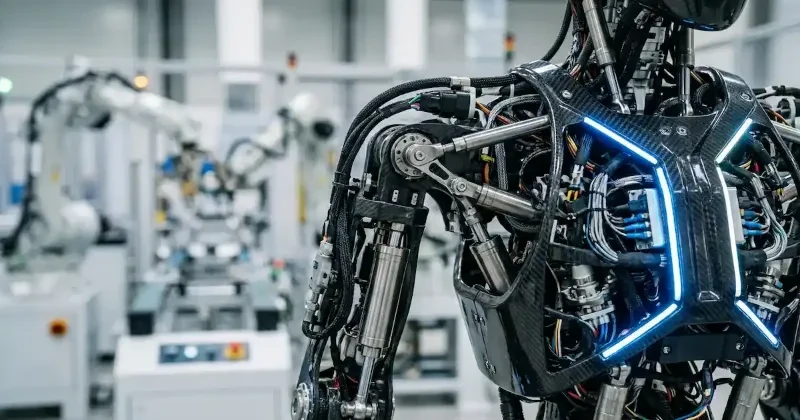
The core of this initiative involves building an autonomous manufacturing ecosystem using NVIDIA’s full-stack infrastructure. LG will leverage NVIDIA Isaac Sim and Isaac Lab to validate "home cobots" in high-fidelity virtual environments before deploying them into physical spaces. Furthermore, LG is developing a physical AI data factory to address the common bottleneck of training data scarcity, utilizing NVIDIA Cosmos models for synthetic data generation.
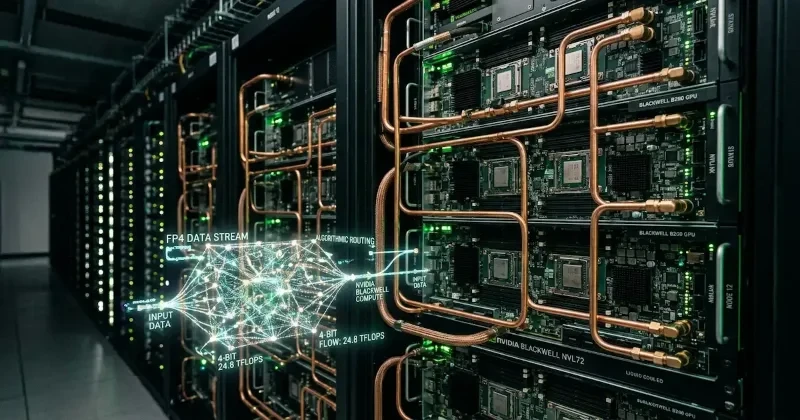
On the infrastructure side, the companies are aligning with the NVIDIA DSX platform to deploy scalable, power-efficient AI factories. This includes technical cooperation on thermal management-specifically cooling distribution units (CDUs) and cold plates-to support the extreme compute demands of next-gen GPUs. Beyond manufacturing, the partnership extends into mobility, with LG aligning its advanced driver-assistance systems (ADAS) and in-vehicle AI with the NVIDIA DRIVE architecture. Finally, LG is doubling down on sovereign AI by using NVIDIA Blackwell GPUs and the NeMo framework to further develop its EXAONE model family for enterprise applications.
Remarks
This partnership is a pragmatic move by NVIDIA to cement its hardware as the operating system for the physical world. While many firms are focused solely on LLMs, NVIDIA is betting that the real battleground is the "Physical AI" space-robotics, factories, and autonomous vehicles.
Our take? It’s a win for the ecosystem. By codifying reference architectures (like DSX for factories and DRIVE for mobility), NVIDIA is reducing the barrier to entry for complex hardware integration. It forces competitors to stop selling just chips and start selling full-stack integration blueprints. We predict that in the next 24 months, the "Factory-as-Code" movement will become standard practice, led by these kinds of deep-tech hardware-software co-developments. The era of manual calibration is ending; if your infrastructure isn't software-defined and simulation-backed, you're going to be left behind by firms running full-stack digital twins.
The integration of NVIDIA’s stack into every layer of LG’s business-from chip-level components to large-scale data centers-demonstrates the sheer momentum behind physical AI. It’s no longer about whether we can train agents, but how quickly we can deploy them into real-world, high-stakes environments like logistics and automotive assembly. We will be tracking how these DSX-aligned factories perform in production compared to legacy setups as the industry moves toward this unified workflow. Stay tuned as we continue to monitor the intersection of silicon and heavy industry.